When removal makes sense
Planned tree removal is different from emergency storm work. The tree may not be actively on a roof or blocking a driveway, but it may still be a poor long-term fit for the property. Idaho Falls homeowners call about trees that are dead, heavily declining, leaning into fences, lifting hardscape, crowding roofs, growing too close to service drops, or dropping limbs repeatedly after wind and snow events.
Aging cottonwoods near the river corridor are a common reason — large limbs and decay deserve careful review before removal or preservation decisions are made. Homeowners also call about ash trees they want removed proactively before emerald ash borer reaches Idaho, blue spruce that have outgrown a side yard, and quaking aspen colonies sending suckers into nearby lawns or garden beds.
What the estimate should include
A useful tree removal estimate should explain how the tree will be taken down, where cut material can safely land, whether limbs need to be lowered, and what cleanup is included. Access matters. A tree in an open front yard is very different from a tree behind a privacy fence, between homes, or wedged near an outbuilding.
Ask whether stump grinding, surface roots, log removal, chips, and haul-away are included or priced separately. Some homeowners keep larger sections for firewood or milling, while others want the site cleared as cleanly as possible.
Tree removal cost factors
Cost usually depends on height, trunk diameter, canopy spread, species, access, condition, and proximity to roofs, fences, vehicles, or service drops. Dead or brittle wood can be harder to work with safely. Large cottonwoods and mature blue spruce often require more planning than smaller ornamental trees.
Stump grinding, debris haul-away, narrow gate access through a fence or alongside an outbuilding, traffic control, difficult rigging, and multiple trips can also change the price. The goal is not a one-size quote; it is a clear scope that separates removal, cleanup, stump work, and optional follow-up trimming. A useful estimate after seeing the tree is more accurate than any phone quote.
Process and cleanup
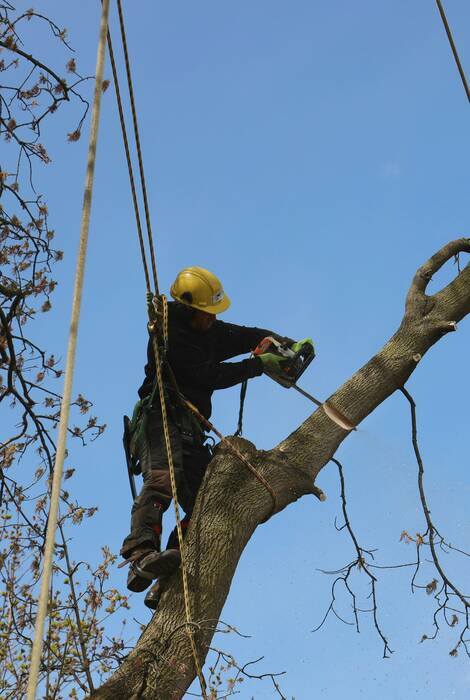
Most planned removals start with an on-site look at access, hazards, drop zones, and cleanup needs. The work may involve removing smaller limbs first, reducing the canopy, then taking the trunk down in sections. If a tree is close to a house, garage, fence, or service drop, controlled cuts and lowering methods may be needed.
Cleanup should be clear before work starts. Options may include hauling debris, stacking firewood, leaving chips for mulch, grinding the stump, or scheduling root cleanup separately. If the tree was removed because of disease, decay, or structural risk, follow-up trimming for nearby trees may also be worth discussing.
Need a tree removed?
Call with the tree location, approximate size, nearby structures, and whether stump grinding or haul-away should be included.